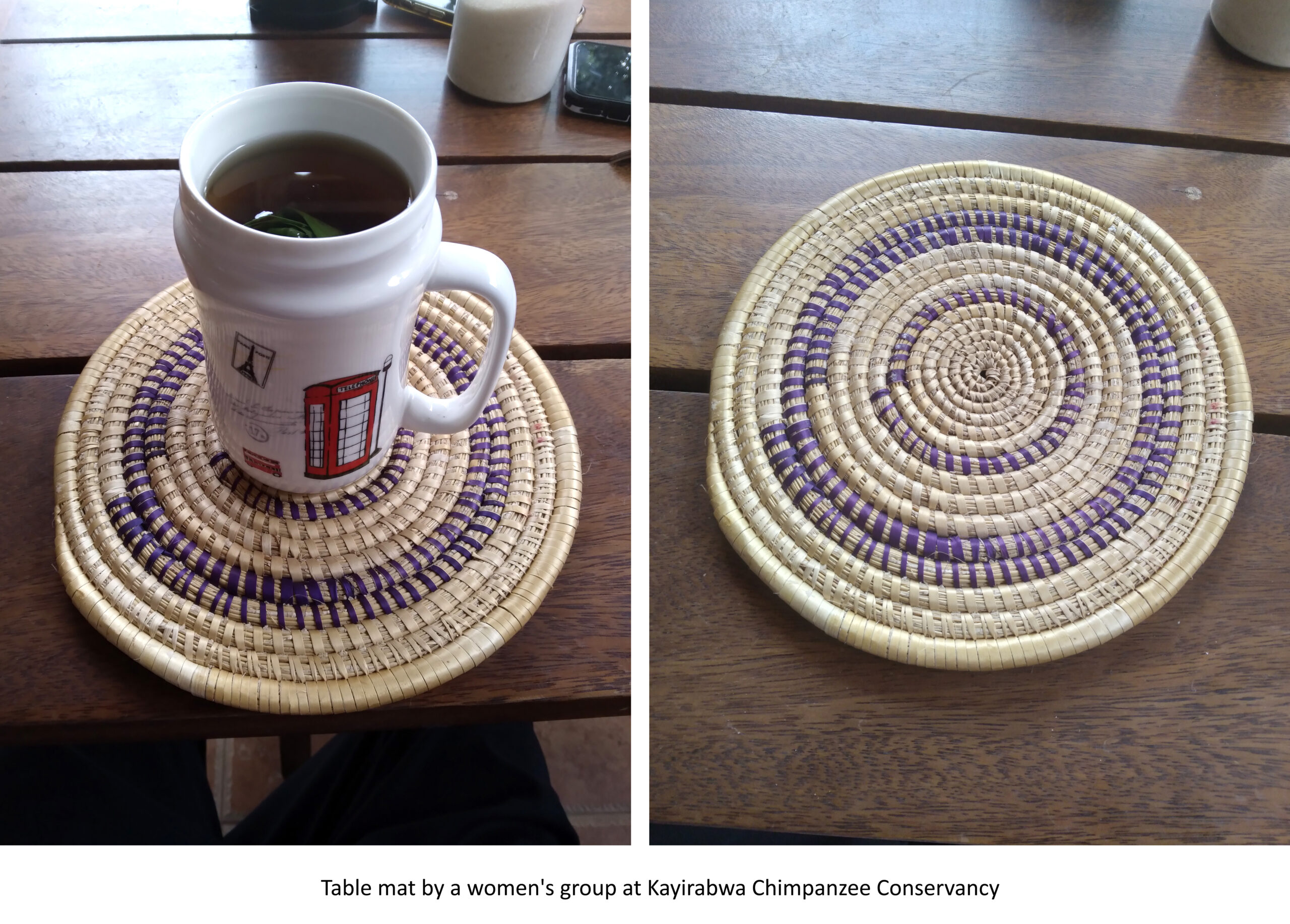
Woven crafts from the Kayirabwa Chimpanzee Conservancy in Uganda.
Help Protect Uganda’s Chimpanzees
Wild chimpanzees are endangered. Volunteer with us in Uganda, or make a donation to support our conservation work.
Woven crafts from the Kayirabwa Chimpanzee Conservancy in Uganda.
Help Protect Uganda’s Chimpanzees
Wild chimpanzees are endangered. Volunteer with us in Uganda, or make a donation to support our conservation work.
Progress is being made at the Our Chimps project in Uganda. We have some exciting new images of our beautiful chimpanzees up close in the wild, taken with motion-detection wildlife camera traps.


How Camera Traps Help
We really appreciate your support!
Help Protect Uganda’s Chimpanzees
Wild chimpanzees are endangered. Volunteer with us in Uganda, or make a donation to support our conservation work.
Chimpanzees are our closest living relatives. They share almost all of our DNA, yet their bodies, social lives and behaviour are very much their own. Here is how much we have in common, and what makes them different.
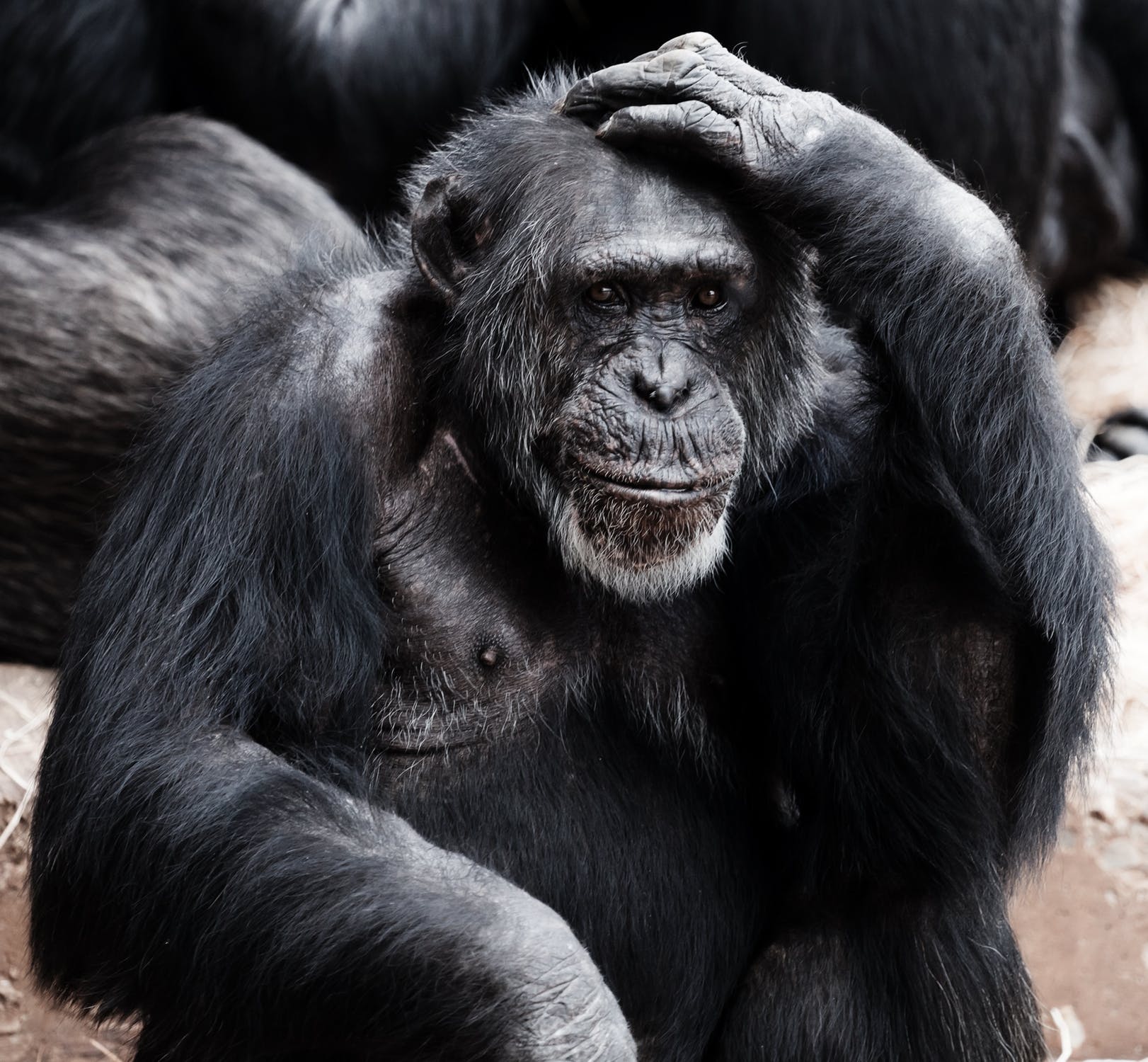
The name chimpanzee covers both living apes in the genus Pan: the common chimpanzee and the bonobo. The Congo River forms the border between their habitats. The two species split from each other about one million years ago.
They look alike, but behave very differently:
Chimpanzees live in communities of several males and females. A dominant alpha male controls the group’s activities, while the females have their own ranking led by a senior female. Females prefer the alpha male for breeding. Males can be very aggressive and will even kill other chimpanzees.
Chimpanzees, gorillas and orangutans all show laughter-like displays when they wrestle, chase each other in play or get tickled.
Chimpanzees are built for life on the ground and in the trees. Their soles are broad and their toes short, and they can walk upright on two legs while carrying things in their arms, though bonobos do this more easily. On the ground they walk on their knuckles, known as knuckle walking, and they use their long arms to climb.
Key Facts
Bonobos are shorter and slimmer than common chimpanzees, with proportionally longer limbs.
Chimpanzees belong to the great ape family, Hominidae, together with gorillas, orangutans and humans. Our two lines split about 6 million years ago.
Human fossils are plentiful, but no chimpanzee fossils were known until 2005. The first were found in Kenya, showing that humans and chimpanzees both lived in East Africa’s Rift Valley during the Pleistocene, far from where wild chimpanzees live today in West and Central Africa.
Help Protect Our Closest Relatives
Wild chimpanzees are endangered. Volunteer with us in Uganda, or make a donation to support our conservation work.
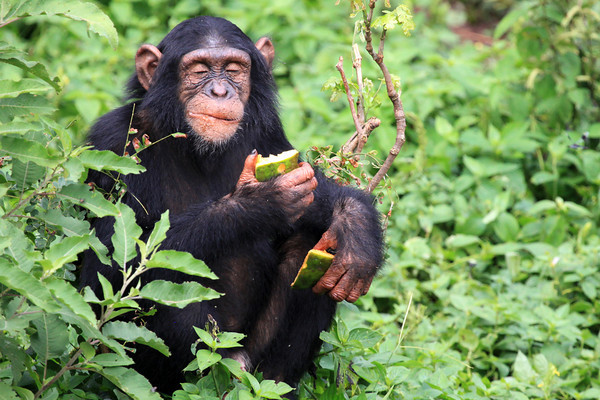
Send your donation in to help save our chimps.
Even a small amount of money can go a long way in helping conserve our chimpanzee endangered species here in Uganda.
Click Here to see what exactly your money will be spent on.